PA · Dorm dimensions
Villanova University Dorm Room Dimensions
Some links on this page are affiliate links. As an Amazon Associate, Elevate My Dorm earns from qualifying purchases — at no extra cost to you.
Living off campus? See the Villanova University off-campus housing guide
Villanova University has room-dimension data for 2 residence halls. Published room sizes range from about 88 to 227 sq ft, with a median of 206 sq ft. Find exact width × length and square footage for each hall below, then preview your layout in the visualizer.
FARLEY HALL
| Room type | Dimensions | Size |
|---|---|---|
| single | 10.3 × 8.5 ft | 88 sq ft |
| double | 16.5 × 11.6 ft | 191 sq ft |
| Standard room | 18.8 × 11.8 ft | 222 sq ft |
| double | 18.8 × 11.8 ft | 222 sq ft |
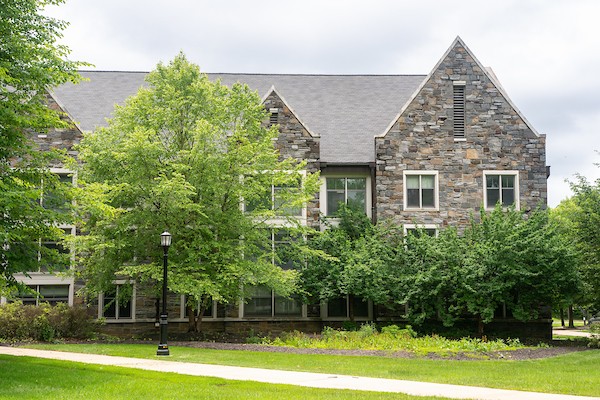
Design this room before move-in
Start from this hall's most common layout (18.8 × 11.8 ft).
Open the room visualizer →KLEKOTKA HALL
| Room type | Dimensions | Size |
|---|---|---|
| double | 16.5 × 11.6 ft | 191 sq ft |
| Standard room | 19.6 × 11.6 ft | 227 sq ft |
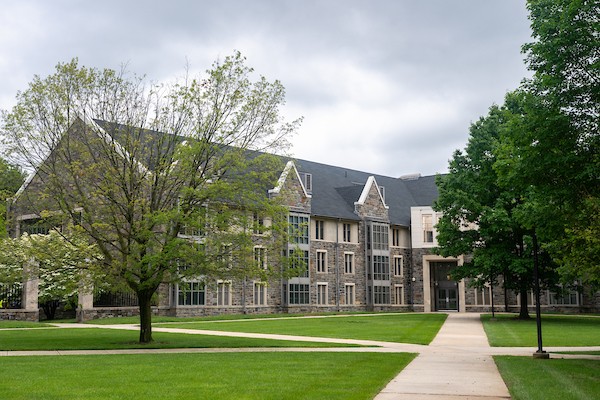

Design this room before move-in
Start from this hall's most common layout (19.6 × 11.6 ft).
Open the room visualizer →What on-campus housing costs at Villanova
Heads up — this school breaks the usual rules
- Closets have NO doors, in the traditional halls and the West Campus apartments alike. Villanova itself notes that “students often bring tension rods with curtains or shower curtains to block the view of the closet” — a required purchase most checklists never mention, and the opposite of schools that ban curtains.
- LED strip lights are out. Light strips that adhere directly to surfaces are prohibited, decorative lights may not be hung from ceilings or obstruct doors and windows, and they may not be left on in an empty room.
- Fish are banned. Villanova’s pet policy explicitly includes reptiles, fish and birds, with a $50-per-day fine — unusual, since most schools permit a small tank.
- The 5-cubic-foot fridge cap is per ROOM, not per student — two roommates who each buy a fridge will have one confiscated.
- Shower curtains are not provided in the Commons apartments and suites and measure 75" x 46". Separately, the larger bathrooms in Farley, Gallen, Jackson and St. Clare are not standard size and the University supplies extra-long curtains there — so buy one everywhere except those four halls.
- Personal air conditioners are prohibited, and rate tiers differ by amenity, so a fan is the only legal fix in a non-air-conditioned room.
Buying the standard college checklist here will waste money — check your building first.
| Hall | Style | Rate |
|---|---|---|
| Fedigan Ties for the cheapest bed at Villanova, and has a pre-installed dehumidifier. | Traditional | $4,812/sem ($9,624/yr) double |
| Delurey Ties for cheapest — the triple and quad configuration is what buys the low rate. | Traditional | $4,812/sem ($9,624/yr) triple/quad |
| Moriarty Entry-level traditional at a flat all-rooms rate, with no room-type premium. | Traditional | $5,131/sem ($10,262/yr) |
| St. Mary’s Mid-tier; suite rooms with a private bath in the same building run $5,862. | Traditional | $5,528/sem ($11,056/yr) |
| Lecetto A premium flat rate above every other hall outside The Commons. | Traditional/suite | $6,359/sem ($12,718/yr) |
| The Commons Most expensive on campus; opened Fall 2019 with a full kitchen, two fitness centers, a convenience store and a restaurant on site. West Campus apartments run $6,526–$6,861/sem. | Apartment | $7,192/sem ($14,384/yr) 4-bedroom |
Rates are billed per semester, with the Bursar showing the annual figure alongside. Meal plans are entirely separate and mandatory for first-year residents, who must take either Anytime Dining 7-Day at $9,720 a year or the 21 Meal Plan at $9,040 — nearly doubling the true first-year cost. A non-optional Undergraduate Student Services Fee of $1,024 a year also applies, making the honest floor for a first-year roughly $19,688 before tuition. Rates compiled from the university’s published housing rates, August 2026. Always confirm on the official rates page.
Who has to live on campus
Students admitted as resident students “are required to reside in on-campus housing during the academic year for their first two years of enrollment.” Residence Life guarantees more than it requires — three consecutive years of on-campus housing — while housing for a fourth year is not guaranteed except for certain scholarship holders, with seniors entering a lottery. Exemption criteria are not published. Note the requirement attaches to being admitted as a resident student, so students admitted as commuters fall outside it.
What the room already includes
Traditional halls are furnished with a bed, dresser, desk, desk chair and closet per resident. The rate covers utilities and wireless internet, and laundry is free — washers and dryers are available at no additional cost. Apartment-style housing is a different purchase entirely: the West Campus buildings and The Commons include full kitchens with a standard-size refrigerator, microwave, four-burner stove and self-cleaning oven plus a furnished living room, though residents must supply their own lamps, television, cookware and dishware. Farley’s single-occupancy units have a two-burner cooktop and no oven. Small dehumidifiers are pre-installed in Stanford, Good Counsel, St. Monica, St. Katharine, Caughlin, McGuire, Fedigan, Sheehan, Sullivan, Austin, Corr and St. Mary’s.
Fridge & microwave rules
Bring your own or rent a MicroFridge through Campus Specialties. The cap is unusual: one 5-cubic-foot unit per residence hall ROOM, not per student, and “only one MicroFridge or refrigerator/microwave per room is permitted.” Roommates must coordinate or one unit gets removed. No microwave wattage cap is published. Unnecessary in The Commons apartments, the West Campus apartments and the Commons efficiency suites, which already have a full-size fridge and microwave.
What you cannot bring
Hot plates, induction cooktops, space heaters and any appliance with an open heating element. ⚠ Villanova contradicts itself on toaster ovens — the Student Handbook permits them in the apartments but not the traditional halls, while the Residence Life what-not-to-bring list bans them flatly. Crock pots are banned on the Residence Life list but unmentioned in the Handbook. Air fryers and Instant Pots are named nowhere — verify before buying. Duct tape, nails, tacks, screws and light strips that adhere directly to surfaces are prohibited. Extension cords and surge protectors are permitted but must be UL approved and never placed under carpets, tacked or stapled. Decorations may not be permanently attached to furniture, doors, windows, walls, floors or ceilings, and stickers are banned. Personal construction of any kind — shelves, lofts, platform beds — is prohibited, cinder blocks and bed-raising items are out, and owner-added headboards are expressly forbidden. Candles of any type, open flames, potpourri burners, incense and halogen lamps are prohibited, as are personal air conditioners and hoverboards. Pets, including fish, are not permitted, with fines of $50 per day.
📦 The complete Villanova University dorm packing list →
Some links on this site are affiliate links — if you buy or request a quote through them, Elevate My Dorm may earn a commission at no extra cost to you. As an Amazon Associate, Elevate My Dorm earns from qualifying purchases. Prices are approximate and change often; the current price always appears on the retailer’s own site. About us