PART TWO — FOR THE PARENT: THEIR MOVE
Chapter 12
Move-In Day Without Tears (Mostly)
You will carry boxes up three flights in August heat, build a loft, and then drive away from your child on purpose. Yes, there is a plan for that.
I spent years of Augusts watching move-in day from the institution’s side — thousands of families, one long sweating parade of minifridges — and I can tell you the day has a secret structure. It is not really a moving day. It is a ceremony. Move-in day is the official handoff from manager to consultant, performed in public, with boxes. The families who understand that have a good day, a real goodbye, and a first phone call that comes sooner than they expected. The families who don’t understand it — who arrive with the manager still fully in charge — have the same sweaty day plus a fight, and they usually have it in front of the new roommate.
So here is the thesis of the whole chapter, and it sorts every decision the day will throw at you. On move-in day, the parent owns the logistics and the student owns the decisions. You carry, you build, you fetch. They decide, they sign, they introduce themselves. Congratulate yourself on a job well done! Hold that line all day and everything else in this chapter is just details — which, since a smooth day is mostly won in advance, is where we start.
One hedge before the timeline, because families come in every shape. Maybe two parents are making this drive, maybe one, maybe a grandparent and an aunt, maybe you’re flying and renting a car, maybe your student is driving themselves and this chapter is about a goodbye in the driveway. The plays are the same at every scale. Adjust the individuals, keep the structure.
The Week Before: Win the Day in Advance
- KNOW your assigned time slot, and treat it as real. Most schools stagger arrivals with assigned windows, specific unloading zones, and rules about how long a car can sit at the curb. It’s all in the housing email nobody reads closely. Read it closely — the family that shows up in the right window finds carts, volunteers, and a parking spot. The family that wings it finds none of those things at noon.
- Run the pre-trip readiness check together. Sit down with your student a week out and confirm the room’s actual dimensions, what the hall provides, and what’s still missing from the packing list (the pre-trip dorm readiness check at ElevateMyDorm.com walks the two of you through it — and note the word ‘together,’ because this is a consulting session, not a parent project).
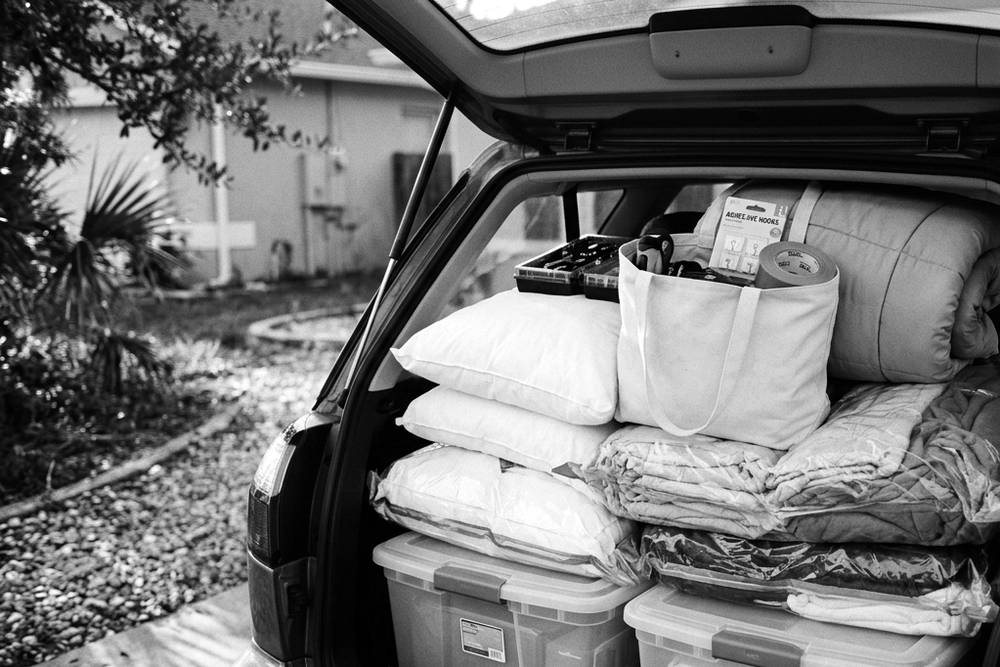
- Pack the car in reverse order. What’s needed first goes in last, on top — the tool kit, the mattress topper and bedding, the command strips, the paper-towels-and-water-bottle layer. Decor, off-season clothes, and everything optional goes in first, at the bottom, and honestly some of it can just stay home (their Chapter 2 has a skip list — believe it).
- Build the paper folder. One folder, in the glove box — the housing assignment email, the parking pass, student ID paperwork, a copy of the health insurance card, prescriptions list, and any forms the school still wants signed. Every August, I watched families dig through phones at a check-in table while a line formed behind them. Be the folder family. TRUST ME.
- Label every box with name, hall, and room number. At many schools, cheerful volunteers will grab boxes out of your trunk and vanish toward the building. This is wonderful exactly as long as the boxes can find their way home.
The Day Itself: Who Does What
The division of labor, stated plainly so everyone can be assigned a role in the car on the drive up. Parents and helpers are the labor and the builders — hauling, loft-raising, fridge-installing, fan-assembling, run-making. The student is the decider and the diplomat — where furniture goes, what gets unpacked, every signature, every key, and every single introduction. That last one matters more than it seems:
- Let them check in alone. You hang back with the boxes; they walk to the table, say their own name, and take their own key. It’s a thirty-second ceremony and it’s theirs.
- Let them meet the RA and the roommate first. You get introduced second, by your student. A warm hello from you is perfect. An interview is not — the RA is their resource now (their half of this book has a whole plan for that relationship), and the roommate relationship has a script that doesn’t need a parent author.
- Build the process, don’t install the personality. Loft the bed, set up the fridge, run the power strips — then stop. Do not organize their desk, fold their clothes into drawers, or arrange the room to your taste. Their Chapter 2 told them decor and arranging is week-one evening work, done with the door propped open, because it’s a social play. An arranged-by-a-parent room isn’t a favor. It’s a decision made in their lane.
- Make the store run happen once. Something will be missing — it always is. One run, one list, their list. Resist the urge to buy the whole aisle ‘just in case.’ The just-in-case items are what next month’s care packages are for.
And a quiet note on the emotional aspects. August heat, long lines, IKEA instructions, and a day this loaded will produce at least one snappish exchange — almost every family gets one. When it comes, let it go past you. Nobody’s crabby sentence on move-in day is a verdict on eighteen years. Water helps more than analysis. So does lunch.
The Goodbye: Short, Scheduled, and Outside
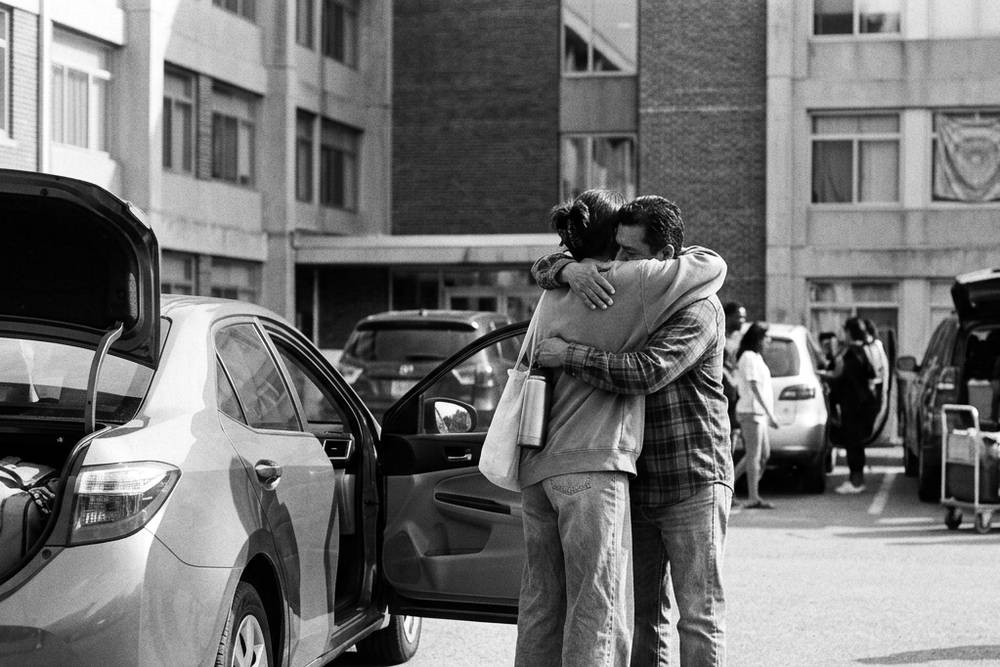
The goodbye is the part families most often get wrong, and the fix is almost mechanical. Decide the departure time in advance, say it out loud in the morning, and do the goodbye at the car — not in the room.
Each piece earns its place. Scheduled, because an open-ended goodbye hangs over the whole afternoon and everyone’s dread grows to fill the available time — ‘we’ll head out at four’ lets the day breathe. Announced, because a surprise goodbye feels like an ambush to a student who’s already at an emotional redline. And outside at the car, because the room now belongs to a person who has to turn around and live in it — with a roommate watching — the moment you leave. The hallway is a stage. The parking lot is private.
Keep the speech to a sentence or two, and write yours in advance, because improvising while your throat is closing goes badly. Something like ‘I’m proud of you, I believe you’re ready, and I can’t wait to hear about it’ covers everything that needs covering. Then — this is the move — you leave while it’s still good. The goodbye that goes best is the one that ends about ninety seconds sooner than your heart wants it to. Many schools actually build this into the schedule with a formal parent send-off event during orientation week; if yours does, follow the program’s cue. The institutions figured out a long time ago that everyone does better with a defined ending.
And then, yes — cry in the car. Everyone does. The tears are not a sign the day went wrong. They’re the receipt for eighteen years, and the title of this chapter promised only ‘mostly.’
The Drive Home and the First 72 Hours
The day has one more section, and it happens after you pull away. What you do in the first seventy-two hours sets the tone for the semester’s whole communication pattern — Chapter 14 will build the full rhythm, but the opening moves belong here:
- Send one text that night, then hold. Something with pride in it and no questions — ‘So proud of you today. Call whenever you want. Go meet your hallway.’ No ‘did you eat,’ no ‘send a picture of the room,’ no thread that needs tending. One note, then radio quiet.
- Let them initiate for the first few days. Their job right now is the six-week window their half of this book has drilled into them — saying yes to everything, meeting the floor, building the new life. Every parent-initiated check-in in week one pulls them out of that new space and back into the old one. Silence in the first days is not distance. It’s usually the sound of it going well.
- Answer fast when they do call. The consultant’s phone gets answered. And when the call comes, run the Chapter 11 protocol — sorting question first, listen to the end, and ‘okay, what’s the plan?’ ready in the chamber.
- Set the first scheduled call for the first weekend. Agree on it before move-in day so it’s a plan, not a demand — Sunday works well (their half is building a Sunday Reset habit anyway, and a scheduled call beats the all-week text drip for both sides).
The drive home with the empty back seat, the first dinner with the empty chair, the strange quiet of the house — that’s real, it deserves more than a paragraph, and it gets a full chapter. Chapter 17 is yours; this book hasn’t forgotten who else just had a life change. But first, the area that causes the most calls home in September: Money. Turn the page before August does.